
When most people think about detailing a car, the first things that come to mind are paint polishing, interior cleaning, and ceramic coating. But one area that often gets overlooked—yet makes a massive difference in your vehicle’s overall appearance—is wheel and tire detailing. Clean, glossy tires and spotless wheels instantly elevate a car’s look, making it appear newer, sharper, and far better maintained. If you’ve ever looked at a freshly detailed car and wondered why it seems so “complete,” the secret is almost always in the wheels and tires.
In this guide, we’ll break down everything you need to know about complete wheel and tire cleaning, restoration, and long-term protection.
Why Wheel and Tire Detailing Matters
Your wheels and tires are the closest parts of your vehicle to the road, which means they’re constantly exposed to:
- Brake dust
- Dirt and mud
- Road grime
- Salt and de-icing chemicals
- Tar
- UV exposure
- Water and moisture
All of these elements can damage the appearance and integrity of both your wheels and tires. Brake dust, in particular, is highly corrosive. Left untreated, it can permanently damage the wheel surface, causing pitting or staining. Tire rubber also dries out over time, leading to cracking, fading, and reduced lifespan.
Professional wheel and tire detailing keeps these crucial components clean, protected, and visually appealing. It also helps extend their life—saving you money and giving your vehicle a better, more polished look.
What’s Included in Complete Wheel and Tire Detailing?
Professional detailers follow a multi-step process to ensure every part of the wheel and tire is thoroughly cleaned and protected. Here’s what a full service usually includes:
1. Pre-Rinse and Surface Prep
Before any scrubbing begins, wheels and tires are thoroughly pre-rinsed. This removes loose dirt, dust, and debris. A strong pre-rinse also helps soften caked-on buildup, making the rest of the process easier.
2. Wheel Cleaning
Specialized wheel cleaners are used, depending on the wheel type. For example:
- Iron-removing cleaners for heavy brake dust
- Acid-free cleaners for delicate finishes
- Gel-based formulas for deep cleaning
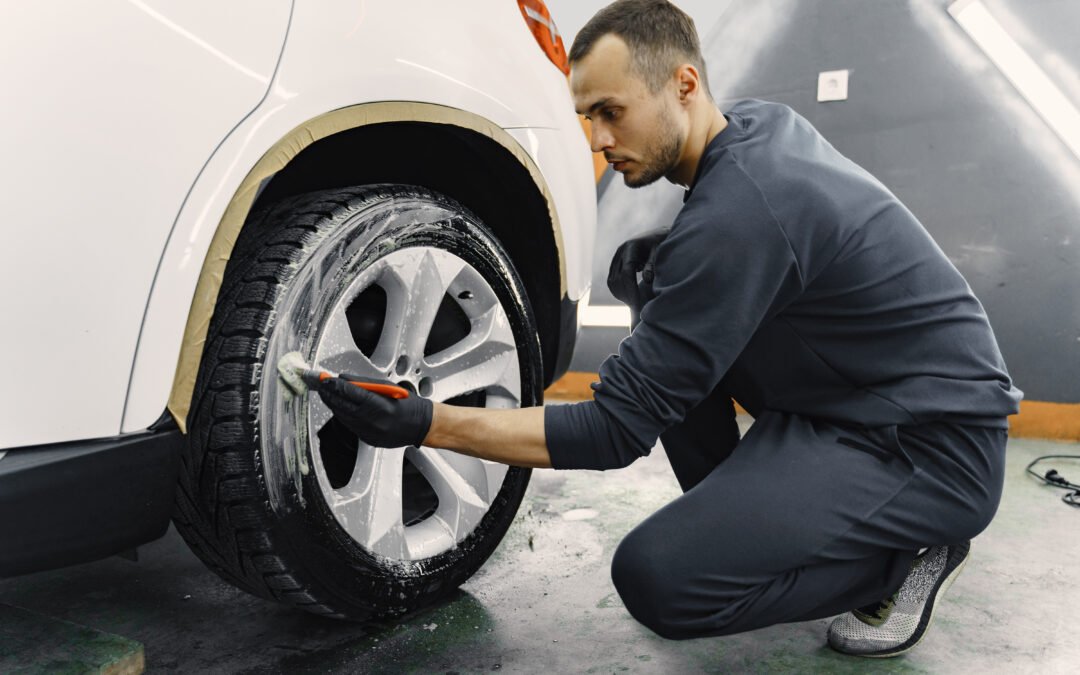
Brushes of various sizes are used to reach all areas, including:
- Lug nut holes
- Wheel spokes
- Inner barrels
- Brake caliper areas
This step ensures the wheel is fully restored and free of grime.
3. Tire Cleaning and Degreasing
Tires naturally soak up dirt, oils, and road film. Tire cleaners or degreasers are scrubbed into the rubber to remove old tire shine, contaminants, and oxidation. Clean tires not only look better—they hold tire dressing longer.
4. Rinse and Dry
Once clean, wheels and tires are rinsed again and dried using microfiber towels or air blowers. This prevents water spotting and leaves a perfect finish for protection.
5. Wheel Protection
Protection is essential. Detailers use:
- Wheel sealants
- Ceramic coatings
- High-temperature-resistant protective sprays
This creates a barrier that makes cleaning easier next time and shields the surface against brake dust.
6. Tire Dressing
A high-quality tire dressing is applied to revive the deep black color and add a clean, satin—or glossy, if preferred—finish. Modern dressings are UV-resistant and help prevent cracking or drying.
Benefits of Professional Wheel and Tire Detailing
If you’ve ever cleaned your wheels at home and still found brake dust stuck in corners, you’ll understand why professional service matters. Here are the biggest advantages:
1. Enhanced Appearance
Wheels and tires make up about 25% of what you visually notice on a car. When they’re clean and shiny, the whole car instantly looks newer.
2. Protection Against Damage
Brake dust is corrosive. Road salt is corrosive. UV rays damage rubber. Professional detailing helps protect these surfaces from long-term wear.
3. Longer Wheel Lifespan
Ceramic-coated or sealed wheels resist contaminants more effectively, reducing the chance of pitting and oxidation.
4. Better Tire Health
Tire dressings nourish rubber and help slow aging, cracking, and fading.
5. Easier Cleaning in the Future
With proper protection applied, dirt and brake dust don’t stick as easily.
Types of Wheels and Their Specific Needs
Different wheel materials require different care. Professionals adjust their products and techniques based on wheel type:
1. Alloy Wheels
Most common; need regular decontamination to prevent brake dust damage.
2. Painted Wheels
Require gentle, pH-balanced cleaners to avoid dulling the finish.
3. Chrome Wheels
Very prone to pitting—regular polishing and sealing are essential.
4. Powder-Coated Wheels
Durable but still benefit greatly from ceramic coating.
5. Custom or High-End Wheels
Exotics often need hand-cleaning and non-acidic formulas only.
Hiring a knowledgeable detailer ensures your wheels get the right treatment.
Why Tire Dressing Is More Than Just Shine
Many drivers assume tire dressing is only for appearance, but it’s much more important than that. Quality dressings:
- Restore natural rubber oils
- Prevent dry rot
- Shield tires from UV rays
- Improve overall tire lifespan
- Help repel dirt and water
The finish can also be customized—some prefer a subtle satin look, while others want a bold, glossy shine.
How Often Should Wheels and Tires Be Detailed?
For average drivers: Every 4–6 weeks.
For vehicles driven daily in dirty or wet conditions:Every 2–4 weeks.
For ceramic-coated wheels: Every 8–12 weeks, but regular maintenance cleaning is still recommended.
Can You Do Wheel and Tire Detailing at Home?
Basic cleaning is possible at home, but professional results are extremely hard to match.
Common DIY mistakes include:
- Using acid-based cleaners on sensitive wheels
- Scratching wheels with the wrong brushes
- Overusing tire shine (causes sling-off on paint)
- Missing brake caliper areas
- Failing to add long-term protection
If you want your wheels and tires to look consistently flawless, professional detailing is the way to go.
Conclusion
Wheel and tire detailing is an essential part of keeping your vehicle looking sharp, clean, and well-maintained. While many car owners focus on the interior or paint, the wheels and tires are what truly give a car its finished appearance. With proper cleaning, protection, and dressing, your wheels will stay cleaner longer, your tires will last longer, and your car will look stunning from every angle.
Whether you drive daily, own a luxury vehicle, or simply take pride in a spotless ride, complete wheel and tire detailing is a service worth investing in.
Give your wheels and tires the attention they deserve!
Frequently Asked Questions (FAQs)
1. How long does wheel and tire detailing take?
A full detail usually takes 30–60 minutes depending on wheel condition, size, and buildup of brake dust or grime.
2. Will wheel cleaning remove scratches?
Cleaning won’t remove scratches, but polishing or wheel restoration services may reduce their visibility.
3. How long does tire shine last?
High-quality tire dressing can last 2–4 weeks, depending on weather and driving conditions.
4. Can ceramic coating be applied to wheels?
Yes! Ceramic coating is one of the best ways to protect wheels from brake dust and make future cleaning easier.
5. Is wheel and tire detailing safe for all types of wheels?
Yes—professional detailers adjust their products to match wheel materials, ensuring safe, damage-free cleaning.
👉 Book your professional wheel and tire detailing service today with Boost Mobile Detailing and experience a stunning transformation from the ground up.
Whether you’re searching for premium detailing, long-term protection, or a flawless finish, we bring expert service right to your driveway.
📞 Call Boost Mobile Detailing for a free quote
📩 Message us to schedule your appointment
🚗 Let your vehicle shine—starting with the wheels and tires.
Recent Comments