
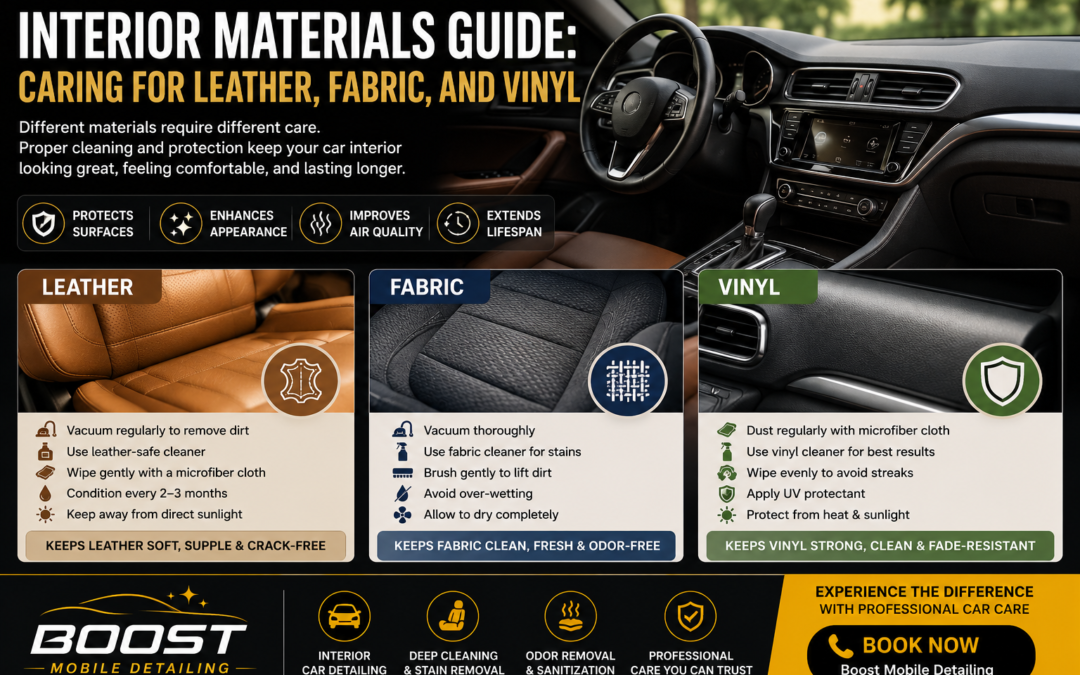
Your vehicle’s interior experiences daily wear from sunlight, dust, spills, moisture, food crumbs, and constant use. Over time, seats, dashboards, door panels, and carpets can start looking faded, stained, or cracked if they are not properly maintained.
Different interior materials require different cleaning methods. Leather needs conditioning, fabric needs deep cleaning, and vinyl requires protection against drying and cracking. Understanding how to care for each material helps maintain your vehicle’s appearance, comfort, and resale value.
Professional cleaning plays a major role in protecting your car’s interior. Many drivers invest in interior car detailing to remove hidden dirt, restore surfaces, and extend the life of their vehicle interiors.
This guide explains how to properly care for leather, fabric, and vinyl interiors so your car stays fresh, clean, and protected.
Why Interior Care Matters
Your vehicle’s interior is exposed to constant stress every day. Heat, UV rays, moisture, and dirt can slowly damage surfaces if ignored.
Benefits of proper interior care include:
- Improved comfort and cleanliness
- Better air quality inside the vehicle
- Protection against cracking and fading
- Reduced stains and odors
- Increased resale value
- Longer lifespan of interior materials
Routine maintenance combined with professional car detailing helps preserve the condition of your vehicle for years.
Caring for Leather Interiors
Leather interiors add luxury and comfort to a vehicle, but they require special care to prevent drying, fading, and cracking.
Common Problems with Leather Seats
Leather surfaces can develop issues such as:
- Cracks from heat exposure
- Fading from UV rays
- Stiff or dry texture
- Stains from spills
- Dirt buildup in seams
Without regular cleaning and conditioning, leather can lose its smooth appearance over time.
How to Clean Leather Properly
1. Vacuum the Surface First
Remove loose dirt and dust before using any cleaning products. Dirt particles can scratch leather surfaces during cleaning.
2. Use a Leather-Safe Cleaner
Avoid harsh household cleaners. Always use products specifically made for automotive leather.
Apply cleaner gently using a microfiber cloth or soft brush.
3. Wipe Carefully
Do not soak leather with excessive liquid. Too much moisture can damage the material.
4. Apply Leather Conditioner
Conditioning is one of the most important steps in leather care. Conditioner restores moisture and prevents cracking.
Experts recommend conditioning leather every few months depending on climate and vehicle usage.
Tips for Protecting Leather Interiors
- Park in shaded areas whenever possible
- Use sunshades to reduce UV exposure
- Clean spills immediately
- Avoid sharp objects on seats
- Schedule regular interior car detailing
Professional detailing removes hidden dirt while safely restoring leather softness and shine.
Caring for Fabric Interiors
Fabric seats are common in many vehicles because they are comfortable and affordable. However, fabric easily absorbs dust, spills, and odors.
Common Fabric Interior Issues
Fabric surfaces often develop:
- Food and drink stains
- Dirt buildup
- Pet hair accumulation
- Lingering odors
- Moisture-related mold
Unlike leather, fabric can trap dirt deep inside the fibers.
How to Clean Fabric Seats
1. Vacuum Thoroughly
Vacuuming removes loose debris before deep cleaning begins. Pay attention to seat corners, stitching, and under-seat areas.
2. Use Fabric Cleaner
Apply automotive fabric cleaner evenly across stained areas. Use a soft brush to gently loosen dirt without damaging the fibers.
3. Avoid Overwetting
Too much water can lead to mold or mildew growth inside seat cushions.
4. Allow Proper Drying
Always let fabric dry completely after cleaning to prevent odors.
Keeping Fabric Interiors Fresh
- Clean stains immediately
- Use seat covers if needed
- Vacuum regularly
- Avoid eating inside the vehicle often
- Schedule regular professional car detailing
Deep cleaning services help remove embedded dirt and bacteria that standard cleaning may miss.
Caring for Vinyl Interiors
Vinyl is widely used on dashboards, door panels, and some seating surfaces because it is durable and affordable. Although vinyl requires less maintenance than leather, it still needs regular care.
Common Vinyl Problems
Vinyl surfaces may develop:
- Cracks from heat exposure
- Fading from sunlight
- Sticky residue buildup
- Dust accumulation
- Surface discoloration
Without protection, vinyl can become brittle over time.
How to Clean Vinyl Properly
1. Dust the Surface
Use a microfiber cloth to remove loose dirt before applying cleaner.
2. Apply Vinyl Cleaner
Choose non-greasy automotive vinyl cleaners for the best results.
3. Wipe Evenly
Use gentle circular motions to avoid streaking.
4. Apply UV Protectant
UV protection helps prevent fading and cracking caused by sunlight.
Vinyl Maintenance Tips
- Avoid harsh chemical cleaners
- Keep dashboards dust-free
- Park away from direct sunlight
- Use interior protectants regularly
Regular detailing keeps vinyl surfaces looking clean and prevents premature aging.
Why Professional Interior Detailing Makes a Difference
While basic cleaning can help maintain your car, professional services provide deeper protection and restoration. Professional detailers use specialized tools and products designed for each material type.
Benefits of professional car detailing include:
- Deep stain removal
- Odor elimination
- Safe cleaning methods
- UV protection treatments
- Steam cleaning technology
- Longer-lasting interior protection
Professional detailing also saves time while delivering better results than standard home cleaning methods.
How Often Should You Detail Your Interior?
Interior cleaning frequency depends on driving habits, weather, pets, and passengers.
General recommendations:
- Basic vacuuming: Weekly
- Surface wipe-downs: Every 1–2 weeks
- Deep interior cleaning: Every 3–6 months
- Full interior car detailing: At least twice a year
Vehicles used daily may require more frequent detailing.
Common Interior Cleaning Mistakes
Using Household Cleaners
Household chemicals can damage automotive materials and leave discoloration.
Ignoring UV Protection
Sun exposure is one of the biggest causes of interior fading and cracking.
Scrubbing Too Hard
Aggressive scrubbing may damage leather coatings and fabric fibers.
Skipping Regular Maintenance
Small stains and dirt buildup become harder to remove over time.
Final Thoughts
Your vehicle’s interior deserves proper care to maintain comfort, appearance, and value. Leather, fabric, and vinyl all require different cleaning methods and protection techniques. Routine maintenance combined with professional car detailing helps preserve your interior surfaces while keeping your vehicle fresh and inviting.
If you want expert interior car detailing services that protect every surface inside your vehicle, trust Boost Mobile Detailing. Our professional team delivers deep interior cleaning, stain removal, leather conditioning, and complete detailing services right at your location.
FAQs
How often should leather seats be conditioned?
Leather seats should usually be conditioned every 2–3 months to prevent drying and cracking.
Can fabric seats be professionally cleaned?
Yes. Professional detailing services use deep-cleaning methods that remove stains, dirt, and odors from fabric seats.
Is vinyl easier to maintain than leather?
Yes. Vinyl generally requires less maintenance, but it still needs UV protection and regular cleaning.
Does professional detailing remove interior odors?
Yes. Professional detailing can help eliminate odors caused by food, pets, smoke, and moisture buildup.
Can sunlight damage car interiors?
Yes. UV rays can fade, dry, and crack leather, vinyl, and fabric over time.
Why should I choose Boost Mobile Detailing?
Boost Mobile Detailing provides expert interior cleaning, stain removal, leather care, and complete detailing services that help keep your vehicle looking and feeling like new.
Recent Comments