
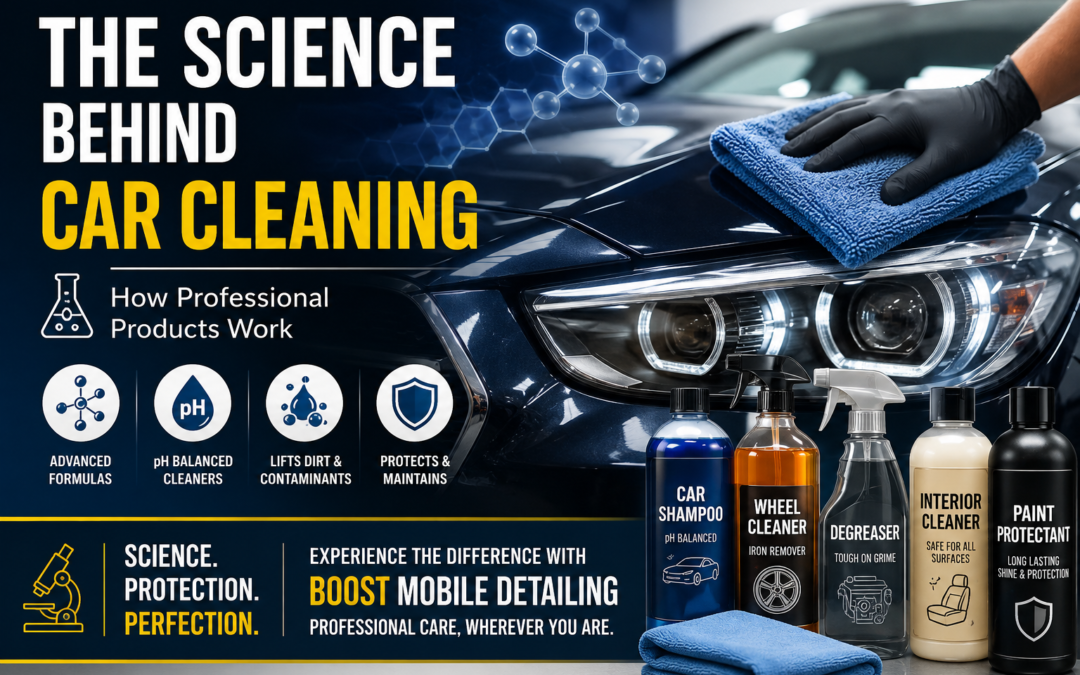
Car cleaning is more than simply using soap and water. Professional car cleaning products are designed to remove different types of dirt, oils, stains, and contaminants without harming the vehicle’s surfaces. From the paint outside to the carpets inside, each material needs the right cleaning method.
Understanding how these products work can help you see why professional local car detailing services often achieve better and longer-lasting results than a basic wash.
Why Does Car Dirt Stick to Your Vehicle?
A vehicle collects many types of contaminants every day. Dust, road salt, grease, brake dust, tree sap, bird droppings, and pollution can all stick to the surface.
Water alone cannot remove many of these contaminants because they do not mix well with water. Some dirt contains oils and other substances that need special cleaning agents. Professional products are formulated to break the bond between contaminants and the vehicle’s surface. This allows dirt to be lifted and rinsed away with less rubbing.
How Car Shampoo Removes Dirt
Car shampoo contains surfactants. These are cleaning molecules that help water spread across a surface and interact with dirt. One end of a surfactant molecule is attracted to water, while the other is attracted to oils and grease. When shampoo is applied, the surfactants surround dirt and oily particles. This helps loosen them from the vehicle.
Once the dirt has been suspended in the cleaning solution, it can be rinsed away. This is one reason professional car shampoo is different from household dish soap. Automotive shampoos are generally developed with vehicle surfaces in mind and can provide cleaning while helping preserve existing wax or protective products.
The Role of pH in Car Cleaning
pH is another important part of professional car care.A product’s pH tells us whether it is acidic, neutral, or alkaline. Different contaminants respond better to different types of cleaners.
For example, alkaline cleaners can be useful for breaking down greasy and oily dirt. Acidic cleaners may help remove certain mineral deposits and water spots. Neutral shampoos are commonly used for regular maintenance washes.
Using the correct product is important. A cleaner that is too strong or used incorrectly may affect sensitive surfaces or existing protection.Professional detailers choose products based on the surface and type of contamination rather than using the same cleaner for everything.
How Degreasers Break Down Tough Grime
Grease and oil can be difficult to remove because they do not dissolve easily in water. This is where degreasers can help.A professional degreaser is designed to break down oily contamination and make it easier to remove. These products can be useful around areas such as wheels, tires, engine compartments, and heavily soiled exterior surfaces.
However, stronger does not always mean better. The product must be diluted and applied correctly for the specific surface. Professional mobile car cleaning services often use different levels of cleaning strength depending on how dirty the vehicle is.
How Wheel Cleaners Remove Brake Dust
Wheels face some of the toughest contamination on a vehicle. Brake dust can contain metallic particles, road grime, and other debris. Specialized wheel cleaners help loosen this buildup. Some products use chemical ingredients that react with iron-based contamination, making it easier to rinse away.
This reduces the need for aggressive scrubbing. Because wheels can have different finishes, including painted, polished, chrome, or coated surfaces, using a suitable wheel cleaner is important.
How Clay Bars Remove Embedded Contaminants
Sometimes a vehicle looks clean but still feels rough after washing. This can happen when contaminants are stuck to the paint. A clay bar or synthetic clay product can remove these bonded particles. The detailer uses a suitable lubricant while gently moving the clay across the paint. The process helps pick up contaminants that normal washing may leave behind.
After clay treatment, the paint often feels noticeably smoother.
How Interior Cleaners Work
The inside of a vehicle contains many different materials. Fabric, leather, plastic, vinyl, rubber, and carpeting all react differently to cleaning products. Interior cleaners are designed to break down dirt, body oils, food residue, and other buildup while being suitable for specific surfaces.
For example, a leather cleaner is formulated differently from a fabric upholstery cleaner. Professional detailers also use controlled moisture levels when cleaning interiors. Too much water can create problems such as slow drying, odors, or moisture buildup.
Why Microfiber Towels Matter
Cleaning products are only part of professional detailing. The tools used to apply and remove them also matter. Microfiber towels contain very fine fibers that can capture dirt and absorb moisture. They are commonly used for drying, wiping surfaces, removing polish, and cleaning interiors. Using clean towels for different areas helps reduce the risk of moving dirt from one surface to another.
How Protective Products Work
Professional detailing does not stop with cleaning. Many services also include protection.
Wax, sealants, and ceramic coatings create a protective layer over the vehicle’s surface. These products can improve water behavior and make future cleaning easier.Some coatings create a highly water-repellent surface, causing water to form droplets and roll away more easily. Protection can also help reduce the direct impact of environmental contaminants, although no coating makes a vehicle completely resistant to scratches or stains.
Why Professional Car Cleaning Gets Better Results
Professional detailing combines chemistry, equipment, technique, and surface knowledge.
A detailer does not simply choose the strongest product available. Instead, the goal is to select the right product for the right contamination and surface. This approach can help prevent unnecessary scrubbing and reduce the chance of damaging delicate finishes. Whether you choose traditional detailing or mobile car cleaning services, professional methods can provide a deeper and more controlled clean than a quick exterior wash.
FAQs
1. Are professional car cleaning products better than household cleaners?
Yes, automotive products are generally formulated for specific vehicle surfaces. Household cleaners may be too strong, too harsh, or unsuitable for certain automotive materials.
2. Why is pH important when cleaning a car?
pH affects how a cleaner interacts with different types of dirt and surfaces. Professional detailers select products based on the contamination and material being cleaned.
3. Can professional cleaning remove every stain?
Not always. Some stains may permanently change a surface. Professional cleaning can often improve their appearance, but results depend on the type, age, and depth of the stain.
4. How often should a car be professionally detailed?
It depends on driving conditions, weather, usage, and how the vehicle is maintained. Many owners benefit from professional detailing several times a year, combined with regular maintenance washes.
Give Your Car the Professional Clean It Deserves
Ready to bring back your car’s clean, fresh look? Boost Mobile Detailing provides professional local car detailing and convenient mobile car cleaning services designed around your vehicle’s needs. From deep interior cleaning to exterior care, our team brings professional detailing directly to you.
Book your service with Boost Mobile Detailing today and give your vehicle the care it deserves!
Recent Comments