
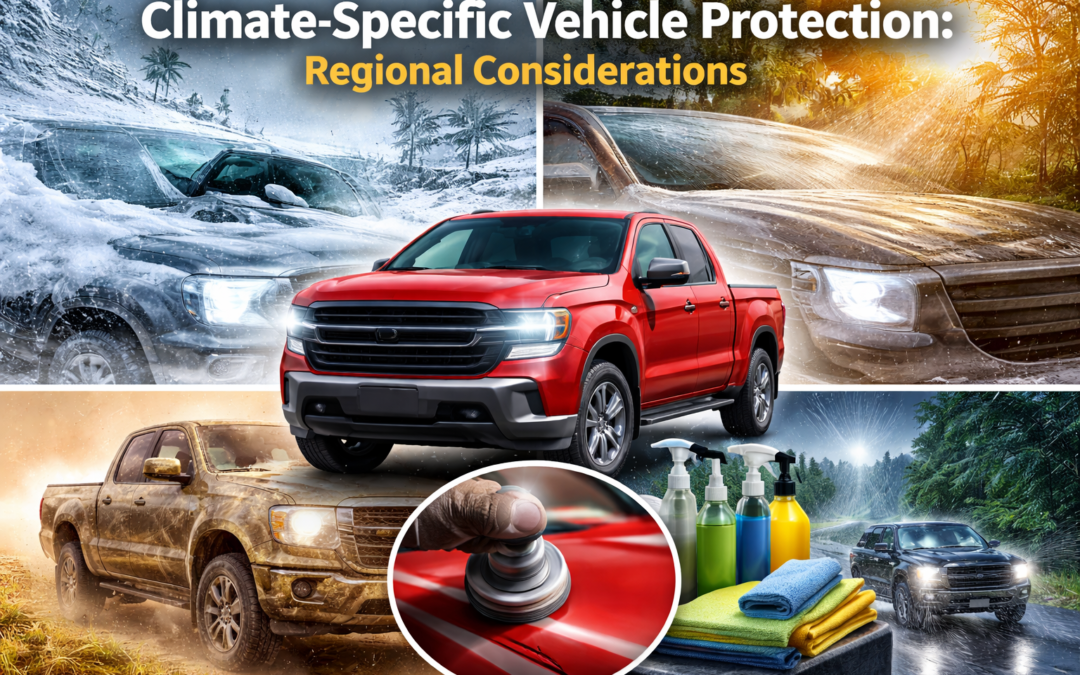
Every vehicle faces environmental stress, but the type of stress varies depending on where you live. Climate plays a major role in how quickly your vehicle’s paint fades, how fast rust forms, and how often interiors become damaged or dirty.Understanding regional weather conditions allows vehicle owners to take preventive steps that extend the life of their car or truck.
Below are key regional climate factors and how they influence proper vehicle care.
1. Protecting Vehicles in Hot and Sunny Regions
High temperatures and constant sun exposure are especially harmful to a vehicle’s exterior and interior surfaces. Over time, strong UV rays break down clear coat layers, leading to faded paint and dull finishes. Interiors are also vulnerable, as heat causes leather to dry out and plastic dashboards to crack.
What vehicle owners should focus on:
- Applying protective wax or ceramic coatings to reduce UV damage
- Using windshield sunshades and parking in covered areas
- Conditioning leather and vinyl surfaces regularly
Professional truck detailing services can apply protective coatings that help prevent oxidation and keep paint glossy even in extreme heat.
2. Challenges in Cold and Snowy Areas
Cold climates present different problems compared to hot regions. Snow, ice, and especially road salt are among the most damaging elements for vehicles. Salt sticks to metal surfaces and accelerates corrosion, particularly on the undercarriage and wheel wells.
Key preventive measures include:
- Washing vehicles frequently during winter to remove salt buildup
- Applying sealants or protective coatings before winter begins
- Inspecting undercarriage components for early signs of rust
After winter, many vehicle owners search for paint correction near me because salt and debris often leave behind scratches, swirl marks, and dull paint that require professional restoration.
3. Vehicle Care in Rainy and Humid Climates
Regions with heavy rainfall or high humidity expose vehicles to constant moisture. This can lead to water stains, foggy windows, and interior issues such as mold or mildew. Moisture can also affect electronic components over time.
Important maintenance practices:
- Keeping carpets and seats dry to prevent mold growth
- Cleaning windows and applying water-repellent treatments
- Removing water spots quickly before they harden into mineral stains
Routine truck detailing services help maintain a clean and sanitized interior, which is particularly important in humid environments where bacteria and odors develop quickly.
4. Dust and Sand Exposure in Dry Regions
In dry and windy areas, vehicles are often covered with dust and sand. While this may seem harmless, fine particles can act like sandpaper against paint when wiped or washed incorrectly. Over time, this leads to visible scratches and loss of shine.
To minimize damage:
- Avoid dry wiping dusty vehicles
- Use proper washing techniques with high-quality microfiber materials
- Apply paint protection coatings to reduce surface abrasion
Regular detailing not only removes dust safely but also maintains a smooth protective layer that prevents long-term paint damage.
5. Coastal Climate and Salt Air Damage
Living near the ocean provides beautiful scenery, but it is one of the harshest environments for vehicles. Salt in the air settles on surfaces and accelerates rust, even when the vehicle never directly touches seawater.
Vehicle protection in coastal areas should include:
- Frequent exterior washing to remove salt particles
- Undercarriage cleaning to prevent hidden corrosion
- Protective coatings that seal paint and metal surfaces
Truck owners in coastal regions especially benefit from scheduled truck detailing services because larger vehicles have more exposed surface area and are more prone to corrosion.
6. Seasonal Changes and Their Impact
Some regions experience multiple climate conditions throughout the year. A vehicle might face intense sun in summer, heavy rain in monsoon seasons, and cold temperatures in winter. These seasonal transitions can be tough on paint, rubber seals, and mechanical components.
Seasonal preparation helps prevent damage:
- Applying protective coatings before extreme weather begins
- Inspecting paint, tires, and seals during seasonal transitions
- Cleaning and conditioning interior surfaces regularly
When seasonal changes leave visible marks such as swirl marks, oxidation, or scratches, searching for paint correction near me is often the best way to restore the vehicle’s original shine.
7. Why Professional Detailing Makes a Difference
While regular washing is important, it does not provide the same level of protection as professional detailing. Experts use specialized tools, cleaning solutions, and protective products that are designed for specific environmental conditions.
Benefits of professional services include:
- Deep removal of contaminants embedded in paint
- Long-lasting protection through sealants and coatings
- Interior sanitization and odor elimination
- Restoration of damaged paint through correction techniques
Truck detailing services are particularly valuable for commercial vehicles that travel long distances and are exposed to multiple climate conditions during daily operations.
8. Long-Term Value of Climate-Aware Maintenance
Ignoring environmental damage may not show immediate results, but over time it significantly reduces a vehicle’s resale value. Faded paint, rust spots, and worn interiors make vehicles look older than they actually are.
By adjusting your maintenance routine based on regional climate, you can:
- Extend the lifespan of your paint and interior materials
- Reduce costly repairs caused by rust or corrosion
- Maintain a clean and professional vehicle appearance
- Improve resale and trade-in value
Conclusion
Climate-specific vehicle protection is essential for anyone who wants to keep their car or truck in excellent condition. Whether you live in a hot, cold, humid, dusty, or coastal region, each environment presents unique challenges that require targeted care. Adapting your maintenance routine, scheduling regular truck detailing services, and using professional solutions like paint correction near me when needed ensures your vehicle remains protected, polished, and durable throughout the year.
Frequently Asked Questions (FAQs)
1. Why is climate-specific vehicle protection important?
Climate-specific protection helps prevent damage caused by heat, rain, snow, and dust. It protects your vehicle’s paint, interior, and overall condition, improving durability and long-term value.
2. How often should I get truck detailing services?
It depends on your location and usage. In harsh climates, truck detailing services are recommended every 2–4 weeks to remove contaminants and maintain proper protection for both interior and exterior surfaces.
3. What is the benefit of searching for paint correction near me?
Searching for paint correction near me helps you find local professionals who can remove scratches, swirl marks, and oxidation, restoring your vehicle’s original shine and smooth finish.
4. Can weather conditions damage car paint permanently?
Yes, extreme sun, road salt, and pollutants can cause permanent damage if not treated early. Regular washing, waxing, and protective coatings help prevent long-term paint issues.
5. Is interior detailing necessary in humid climates?
Absolutely. Humidity can lead to mold growth, bacterial growth, and unpleasant odors. Regular interior cleaning and sanitization keep your vehicle fresh, healthy, and comfortable.
Recent Comments