
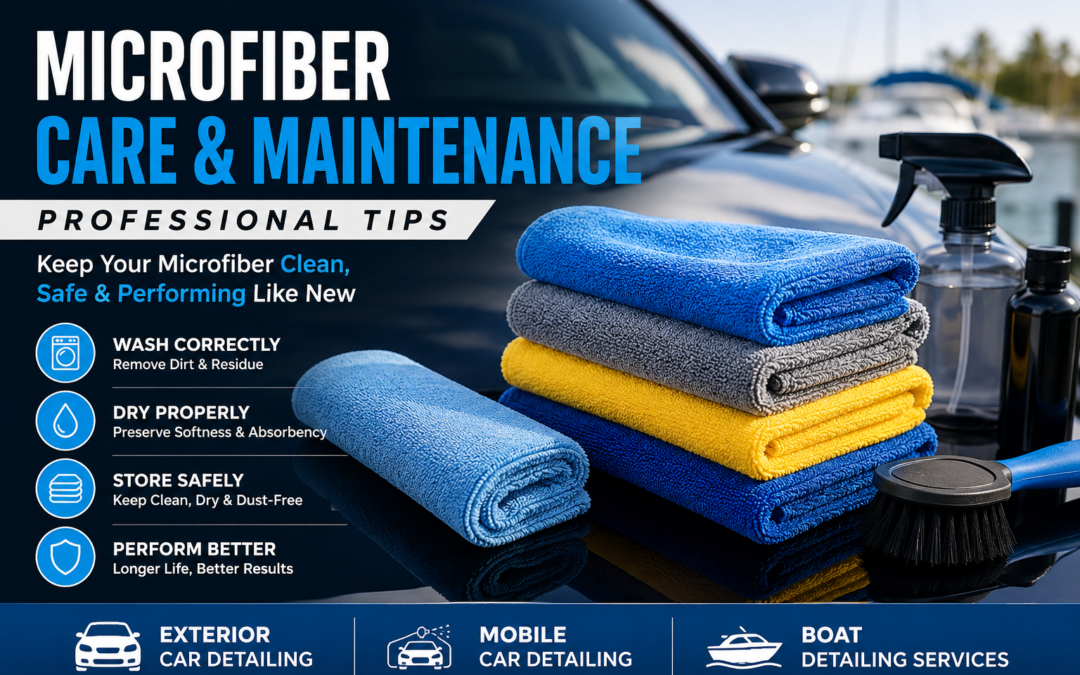
Microfiber towels are one of the most valuable tools in vehicle care. Whether you are working on Mobile car detailing, exterior car detailing, or Boat detailing services, the quality of your microfiber towels directly affects the final result.
Clean, well-maintained microfiber removes dirt safely, protects delicate paint, and creates a streak-free finish. However, poor washing habits or improper storage can quickly ruin even premium towels.
This guide explains how to clean, maintain, and store microfiber towels so they continue delivering professional results for years.
Why Microfiber Matters
Microfiber is made from extremely fine synthetic fibers that trap dust, dirt, and moisture more effectively than traditional cotton cloths. High-quality microfiber helps:
- Reduce swirl marks
- Prevent scratches
- Absorb more water
- Leave lint-free finishes
- Improve polishing and waxing results
- Increase cleaning efficiency
Professionals offering Mobile car detailing depend on microfiber because it safely cleans every vehicle surface without causing unnecessary damage.
Different Microfiber Towels Have Different Jobs
Using one towel for every task is a common mistake.
Assign towels for specific purposes.
Glass Towels
Perfect for:
- Windows
- Mirrors
- Windshields
These towels leave fewer streaks and produce crystal-clear glass.
Drying Towels
Designed to absorb large amounts of water quickly after washing.
Ideal for:
- Cars
- SUVs
- Trucks
- Boats
Polishing Towels
These are softer and thicker.
They are best for:
- Wax removal
- Ceramic coating leveling
- Sealants
- Spray detailers
Wheel Towels
Brake dust contains tiny metal particles.
Always use separate towels for:
- Wheels
- Tires
- Exhaust tips
- Engine bays
Never reuse these towels on painted surfaces.
Wash Microfiber After Every Use
Dirty towels hold:
- Dirt
- Road grime
- Grease
- Wax residue
- Polish residue
Using dirty microfiber again increases the chance of scratching paint. Professional exterior car detailing services wash microfiber immediately after every detailing job. The cleaner the towel, the safer the finish.
Shake Out Dirt Before Washing
Before placing towels into the washing machine:
- Shake off loose dust
- Remove leaves
- Brush away sand
- Separate heavily soiled towels
This simple step prevents abrasive particles from staying trapped inside the fibers.
Use a Microfiber-Safe Detergent
Choose detergents that contain:
- No bleach
- No fabric softener
- No fragrances
- No heavy perfumes
Fabric softeners coat microfiber fibers and reduce their ability to absorb water. A mild liquid detergent is usually the safest option.
Wash Similar Towels Together
Separate microfiber into categories. For example:
- Glass towels
- Drying towels
- Interior towels
- Exterior towels
- Wheel towels
This prevents grease and brake dust from contaminating towels used on delicate paint. Professional Mobile car detailing teams often color-code towels for this reason.
Wash in Warm Water
Warm water helps dissolve:
- Wax
- Oil
- Dirt
- Road film
Avoid extremely hot water because excessive heat may damage microfiber fibers. Warm water provides the best balance between cleaning and protecting the fabric.
Skip Fabric Softener Completely
Fabric softener blocks the tiny fibers that capture dirt and moisture. Once coated, towels become:
- Less absorbent
- Less effective
- More likely to leave streaks
Instead, wash microfiber with detergent only.
Dry Microfiber Correctly
High heat is another common reason microfiber wears out early. The safest drying methods are:
- Air drying
- Low heat dryer setting
High temperatures can melt synthetic fibers, reducing softness and cleaning performance.
Never Mix Microfiber with Cotton
Cotton towels release lint. Microfiber attracts lint easily, making towels less effective for:
- Glass cleaning
- Paint polishing
- Ceramic coating
Always wash microfiber separately.
Store Towels in a Clean Space
Even freshly washed towels can collect dust if stored incorrectly.
Keep them:
- Folded
- Dry
- Covered
- Away from moisture
Plastic storage containers with lids work well for professional detailing businesses.
Replace Damaged Towels
Inspect microfiber regularly. Replace towels showing:
- Frayed edges
- Hard fibers
- Permanent stains
- Embedded debris
- Reduced softness
Old towels may scratch sensitive paint during exterior car detailing.
Keep Dedicated Towels for Special Jobs
Professionals never use one towel for everything. Examples include:
Paint Towels
Glass Towels
Wheel Towels
Interior Towels
Engine Towels
Remove Wax Residue Quickly
Wax and ceramic sprays harden inside microfiber if left too long. Wash towels soon after use. Waiting several days allows residues to dry inside the fibers, making complete cleaning much harder.
Inspect Before Every Detail
Before using any towel, check for:
- Dirt particles
- Sand
- Small stones
- Metal shavings
Even a single tiny particle can cause scratches on a vehicle’s finish. Professional detailers inspect every towel before touching paint.
Caring for Microfiber Used in Boat Detailing
Saltwater creates additional maintenance challenges. Towels used in Boat detailing services should be rinsed thoroughly before washing. Salt crystals trapped inside microfiber can damage fibers over time.
For marine detailing:
- Rinse immediately
- Wash separately
- Dry completely
- Store in sealed containers
These extra steps extend towel life and improve cleaning performance.
Common Microfiber Care Mistakes
Avoid these common errors:
- Using bleach
- Adding fabric softener
- Washing with cotton towels
- Using high dryer heat
- Reusing dirty towels
- Cleaning wheels and paint with the same towel
- Leaving wet towels in sealed bags
- Storing towels while damp
Avoiding these habits keeps microfiber soft and effective.
Why Proper Maintenance Saves Money
Premium microfiber towels are an investment.
Good maintenance helps:
- Extend towel lifespan
- Improve detailing quality
- Reduce replacement costs
- Prevent paint damage
- Deliver better customer satisfaction
Businesses offering Mobile car detailing, exterior car detailing, and Boat detailing services rely on quality tools to produce professional results every day.
Final Thoughts
Microfiber towels may look simple, but they play a major role in achieving a flawless finish. Proper washing, drying, storage, and organization help them stay soft, absorbent, and safe for every detailing task. Whether you’re cleaning family vehicles, maintaining a fleet, or providing professional Mobile car detailing, investing a little extra time in microfiber care leads to better results, fewer scratches, and longer-lasting equipment. By following these professional maintenance tips, you’ll protect both your towels and every vehicle you work on.
Frequently Asked Questions
How often should microfiber towels be washed?
Microfiber towels should be washed after every detailing job to remove dirt, wax, and debris that could scratch vehicle surfaces.
Can I use fabric softener on microfiber towels?
No. Fabric softener coats the fibers, reducing their absorbency and cleaning performance.
Should I wash microfiber towels separately?
Yes. Washing microfiber separately from cotton prevents lint contamination and helps maintain cleaning effectiveness.
How long do microfiber towels last?
With proper care, high-quality microfiber towels can last for hundreds of wash cycles before needing replacement.
Why are microfiber towels important for exterior car detailing?
They safely lift dirt, reduce swirl marks, and create a streak-free finish, making them essential for professional exterior car detailing.
Can the same microfiber towels be used for boat detailing?
It is better to dedicate separate towels for Boat detailing services, especially because saltwater and marine contaminants require specialized care and cleaning.
Give Your Vehicle the Professional Care It Deserves
Looking for premium Mobile car detailing, expert exterior car detailing, or reliable Boat detailing services? Boost Mobile Detailing uses professional-grade microfiber products and proven detailing techniques to deliver exceptional results while protecting every surface. Book your detailing service today and experience a spotless, showroom-quality finish that lasts.
Recent Comments