
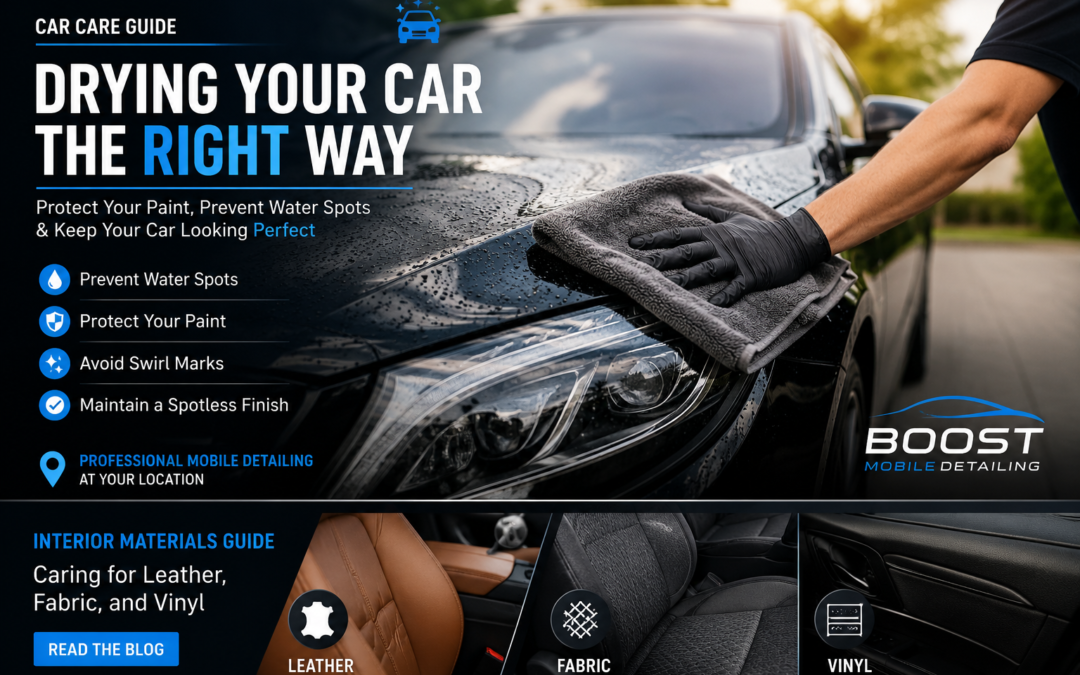
Washing your car is only half the job. If the vehicle is not dried properly, water spots, streaks, and even paint damage can appear quickly. Many car owners spend time cleaning their vehicles, but overlook the importance of safe drying techniques. Proper drying not only improves shine but also protects your vehicle’s paint, glass, and trim.
Professional detailing experts understand that drying is one of the most important steps in vehicle care. Whether you wash your car at home or book a Mobile car detailing service, using the right drying methods can keep your vehicle looking newer for longer.
Why Proper Drying Matters
After washing, the water left on the surface begins to evaporate. Minerals and contaminants in the water remain behind, creating water spots. Over time, these spots can become difficult to remove and may damage the paint surface. Improper drying can also cause swirl marks and scratches. Using rough towels, old cloths, or dirty materials can drag dirt particles across the paint, leaving fine scratches.
A proper drying routine helps:
- Prevent water spots
- Reduce streaks
- Protect paintwork
- Maintain shine
- Extend the life of exterior surfaces
Start Drying Immediately After Washing
One of the biggest mistakes people make is letting the vehicle air-dry in the sun. Heat speeds up evaporation, which increases the chances of water spots forming. Always begin drying the car immediately after rinsing. If possible, wash and dry the vehicle in a shaded area or during cooler parts of the day. This gives you more time to remove water safely before it dries naturally. Professional Mobile car detailing teams often work in controlled conditions to avoid direct sunlight and achieve a spotless finish.
Use High-Quality Microfiber Towels
The type of towel you use matters more than many people realize. Traditional bath towels or rough fabrics can scratch the paint surface. Microfiber drying towels are the safest and most effective option because they:
- Absorb large amounts of water
- Reduce friction on paint
- Minimize streaks
- Prevent swirl marks
Choose soft, clean microfiber towels specifically designed for automotive use. Fold the towel into sections while drying so you always use a clean surface. Avoid reusing towels that contain dirt or debris from previous washes.
Dry From Top to Bottom
Always dry the upper sections of the vehicle first. Water naturally flows downward, so starting at the roof helps prevent dripping onto already dried areas. A simple order includes:
- Roof
- Windows
- Hood and trunk
- Doors and side panels
- Bumpers and lower areas
Lower sections usually collect the most dirt, so drying them last helps avoid transferring contaminants to cleaner surfaces.
Use Gentle Motions
Aggressive rubbing can create tiny scratches in the clear coat. Instead of scrubbing the surface, gently glide the towel across the paint. Pat drying is another safe technique. Simply place the towel on the surface and lightly blot the water away. This reduces friction and lowers the risk of swirl marks. Professional detailers use careful methods to preserve paint quality while achieving a smooth, glossy finish.
Don’t Forget Hidden Areas
Water often collects in mirrors, door handles, trim, and around emblems. If ignored, these areas can drip later and leave streaks on freshly dried paint. Open the doors, trunk, and fuel cap area to remove trapped water. A small detailing towel or air blower can help dry tight spaces effectively.
Drivers searching for vehicle interior cleaning near me often overlook how moisture around door seals and interior edges can also lead to odors and mold growth over time. Proper drying helps maintain a cleaner interior environment as well.
Consider Using Air Drying Tools
Many professional detailers use air blowers or compressed air tools to remove water from difficult areas. These tools help dry:
- Side mirrors
- Grilles
- Wheel nuts
- Trim gaps
- Badges
Touchless drying methods reduce direct contact with paint and lower the risk of scratches. Even a small handheld blower can make home drying faster and more effective.
Apply a Protective Wax or Sealant
A protected surface dries more easily. Wax and paint sealants create a smooth barrier that allows water to slide off quickly. Hydrophobic protection reduces water spotting and makes future washes easier. Vehicles with ceramic coatings or sealants often require less drying time because water beads and rolls away naturally. This is one reason professional Mobile car detailing services often recommend regular paint protection treatments.
Final Thoughts
Drying your vehicle properly is just as important as washing it. The right techniques help prevent water spots, paint damage, and swirl marks while keeping your car looking clean and polished. Using microfiber towels, drying in shaded areas, and removing water from hidden spaces can make a big difference in your vehicle’s appearance and long-term protection. Whether you wash your car yourself or hire a Mobile car detailing professional, proper drying techniques will help maintain a spotless finish and protect your investment for years to come. For expert exterior and interior care, trust Boost Mobile Detailing. From safe washing methods to complete Mobile car detailing services, our team helps keep your vehicle clean, protected, and looking its best. If you are searching for reliable vehicle interior cleaning near me, Boost Mobile Detailing delivers professional results directly to your location. For more car care tips, check out our related blog: Interior Materials Guide: Caring for Leather, Fabric, and Vinyl
Recent Comments