
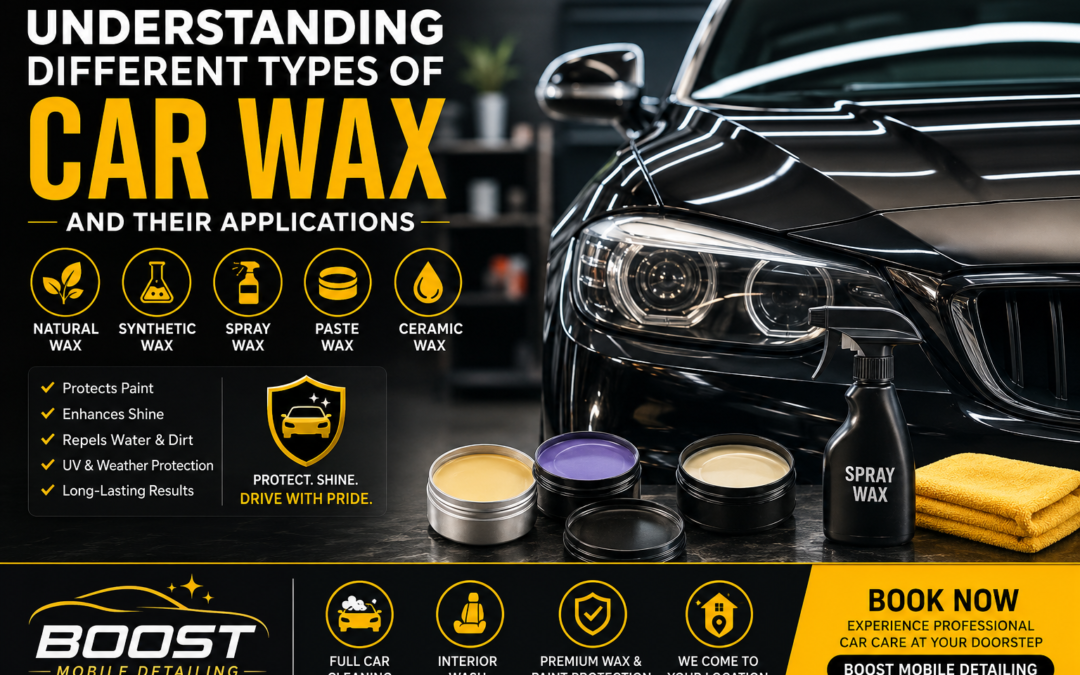
Keeping your car clean is only part of proper vehicle care. Protecting the paint is just as important, and that’s where car wax comes in. Wax adds a protective layer over your vehicle’s paintwork, helping it stay shiny while guarding against dirt, sunlight, rain, and road grime.
Many car owners search for a full car cleaning service near me after noticing dull paint or fading surfaces. In many cases, regular waxing can help maintain that fresh, polished look for much longer. However, not all wax products are the same. Different types of car wax offer different levels of shine, durability, and protection.
In this guide, we’ll explain the main types of car wax, how they work, and when to use them so you can make the right choice for your vehicle.
Why Car Wax Matters
Car wax does more than improve appearance. It creates a barrier between your vehicle’s paint and harmful outside elements. Dust, UV rays, bird droppings, tree sap, and water can slowly damage your paint over time. Wax helps reduce that damage and makes cleaning easier.
Benefits of regular waxing include:
- Better paint protection
- Improved shine and gloss
- Easier washing and maintenance
- Reduced fading from sunlight
- Water beading protection
- Longer-lasting exterior finish
Professional detailing services often combine waxing with washing and polishing to keep vehicles in top condition.
Natural Car Wax
Natural wax is commonly made from carnauba wax, which comes from Brazilian palm leaves. It is one of the oldest and most popular types of automotive wax.
Benefits of Natural Wax
- Produces a deep, warm shine
- Great for dark-colored vehicles
- Easy to apply by hand
- Enhances paint depth
Car enthusiasts often prefer natural wax because it creates a rich gloss that looks impressive in sunlight.
Limitations
- Does not last as long as synthetic wax
- Requires more frequent reapplication
- Less resistant to harsh weather
Natural wax is ideal for drivers who enjoy maintaining their cars regularly and want a showroom-style finish.
Synthetic Car Wax
Synthetic wax, also known as paint sealant, is made from man-made polymers designed for long-lasting protection.
Benefits of Synthetic Wax
- Lasts longer than natural wax
- Strong protection against UV rays
- Better resistance to rain and dirt
- Easier long-term maintenance
Many drivers choose synthetic wax because it can protect a vehicle for several months.
Limitations
- Shine may look less warm compared to carnauba wax
- Some products require careful application
Synthetic wax works well for daily-driven vehicles exposed to changing weather conditions.
Spray Wax
Spray wax is one of the easiest products to use. It comes in a spray bottle and can be applied quickly after washing the car.
Benefits of Spray Wax
- Fast application
- Good for touch-ups
- Adds temporary shine
- Perfect for maintenance between detailing sessions
People looking for an interior wash car near me often also request quick exterior waxing services because spray wax can refresh a car’s appearance in very little time.
Limitations
- Short-lasting protection
- Not as durable as paste or synthetic wax
Spray wax is best for maintaining shine between full detailing appointments.
Paste Wax
Paste wax is a thick wax product usually sold in a small container. It takes more effort to apply but it delivers strong protection and a glossy finish.
Benefits of Paste Wax
- Long-lasting shine
- Excellent water resistance
- Thick protective coating
- Ideal for older paint
Paste wax is commonly used during professional detailing because it provides reliable results.
Limitations
- Requires more time to apply
- Can be difficult for beginners
Drivers who want maximum gloss often choose paste wax for seasonal paint protection.
Liquid Wax
Liquid wax is easier to spread compared to paste wax and works well for beginners.
Benefits of Liquid Wax
- Simple application process
- Smooth finish
- Good durability
- Works well with polishing machines
Many detailing professionals use liquid wax during complete exterior treatments.
Limitations
- Slightly less durable than paste wax
- Some products may leave streaks if overused
Liquid wax is a balanced option for drivers who want both convenience and protection.
Ceramic Wax
Ceramic wax combines traditional wax ingredients with ceramic technology for stronger paint protection.
Benefits of Ceramic Wax
- Excellent water beading
- Long-lasting protection
- Better resistance to contaminants
- High-gloss finish
Ceramic wax has become popular because it offers stronger protection without the high cost of full ceramic coating.
Limitations
- More expensive than regular wax
- Proper preparation is important
This type of wax is ideal for people wanting modern paint protection with easier maintenance.
Choosing the Right Wax for Your Vehicle
The best wax depends on your vehicle, driving habits, and maintenance routine.
Choose Natural Wax If:
- You want maximum shine
- Your car is kept indoors
- You enjoy regular detailing
Choose Synthetic Wax If:
- You drive daily
- You need long-lasting protection
- Your car stays outdoors often
Choose Spray Wax If:
- You want quick maintenance
- You wash your car frequently
- You need fast shine enhancement
Choose Ceramic Wax If:
- You want advanced protection
- You prefer low-maintenance care
- You want better durability
How Often Should You Wax Your Car?
Waxing frequency depends on the product used and driving conditions.
General recommendations:
- Natural wax: Every 4–6 weeks
- Synthetic wax: Every 4–6 months
- Spray wax: Every few weeks
- Ceramic wax: Every 6–12 months
Vehicles exposed to strong sunlight, heavy rain, or road salt may need more frequent waxing.
Professional Waxing vs DIY Waxing
While many people wax their cars at home, professional detailing offers several advantages.
Professional detailers:
- Properly clean and prepare surfaces
- Remove contaminants before waxing
- Use high-quality products
- Apply wax evenly
- Protect both interior and exterior surfaces
A professional service can save time and deliver longer-lasting results.
Common Waxing Mistakes to Avoid
Applying Wax on a Dirty Surface
Wax seals contaminants into the paint if the vehicle is not cleaned properly first.
Using Too Much Product
A thin layer works better than a thick coat.
Waxing Under Direct Sunlight
Heat can cause uneven application and streaking.
Ignoring Interior Care
Many drivers focus only on exterior shine while forgetting cabin cleanliness. Searching for an interior wash car near me can help maintain both comfort and vehicle value.
Final Thoughts
Understanding the different types of car wax helps you protect your vehicle properly and maintain its appearance for years. Whether you choose natural wax for shine, synthetic wax for durability, or ceramic wax for advanced protection, regular waxing keeps your car looking clean and polished.
Combining waxing with routine detailing gives your vehicle the care it deserves, both inside and out. If you are searching for a reliable full car cleaning service near me, trust Boost Mobile Detailing for professional interior and exterior vehicle care. From deep cleaning to premium waxing services, our team helps your car stay protected, spotless, and road-ready.
FAQs
What is the best type of car wax for beginners?
Liquid wax and spray wax are usually the easiest options for beginners because they are simple to apply and remove.
How long does car wax last?
It depends on the type of wax. Spray wax may last a few weeks, while synthetic and ceramic wax can last several months.
Can waxing protect my car from sun damage?
Yes. Wax helps protect paint from harmful UV rays that can cause fading over time.
Is ceramic wax the same as ceramic coating?
No. Ceramic wax provides temporary protection, while ceramic coating is a more permanent professional treatment.
Should I wash my car before waxing?
Yes. Always wash and dry the vehicle completely before applying wax for the best results.
Can professional detailing improve my car’s resale value?
Yes. Regular detailing and paint protection help maintain your vehicle’s appearance and overall condition, which can improve resale value.
Recent Comments